Bank accounts
Your company's bank accounts serve two purposes: they tell customers where to pay, and they let you record what the balance was on a given day.
Adding an account
An account holds a name (how you recognize it: "Main EUR account"), the bank, the IBAN and BIC, its currency, and an optional note.
One account can be marked as the default. It is the one offered first when you create an invoice.
Printing payment details on an invoice
While creating an invoice you choose which accounts to show on it. The selected accounts are printed on the PDF as payment instructions, and, like every other detail on an invoice, they are frozen onto that document. Changing an IBAN later never rewrites an invoice you already sent, so a customer paying an old invoice still sees the account that was valid when they received it.
Balances are snapshots, not a ledger
uninvoice.app does not connect to your bank and does not track individual movements. Instead you record a balance: an amount, and the date it was true on.
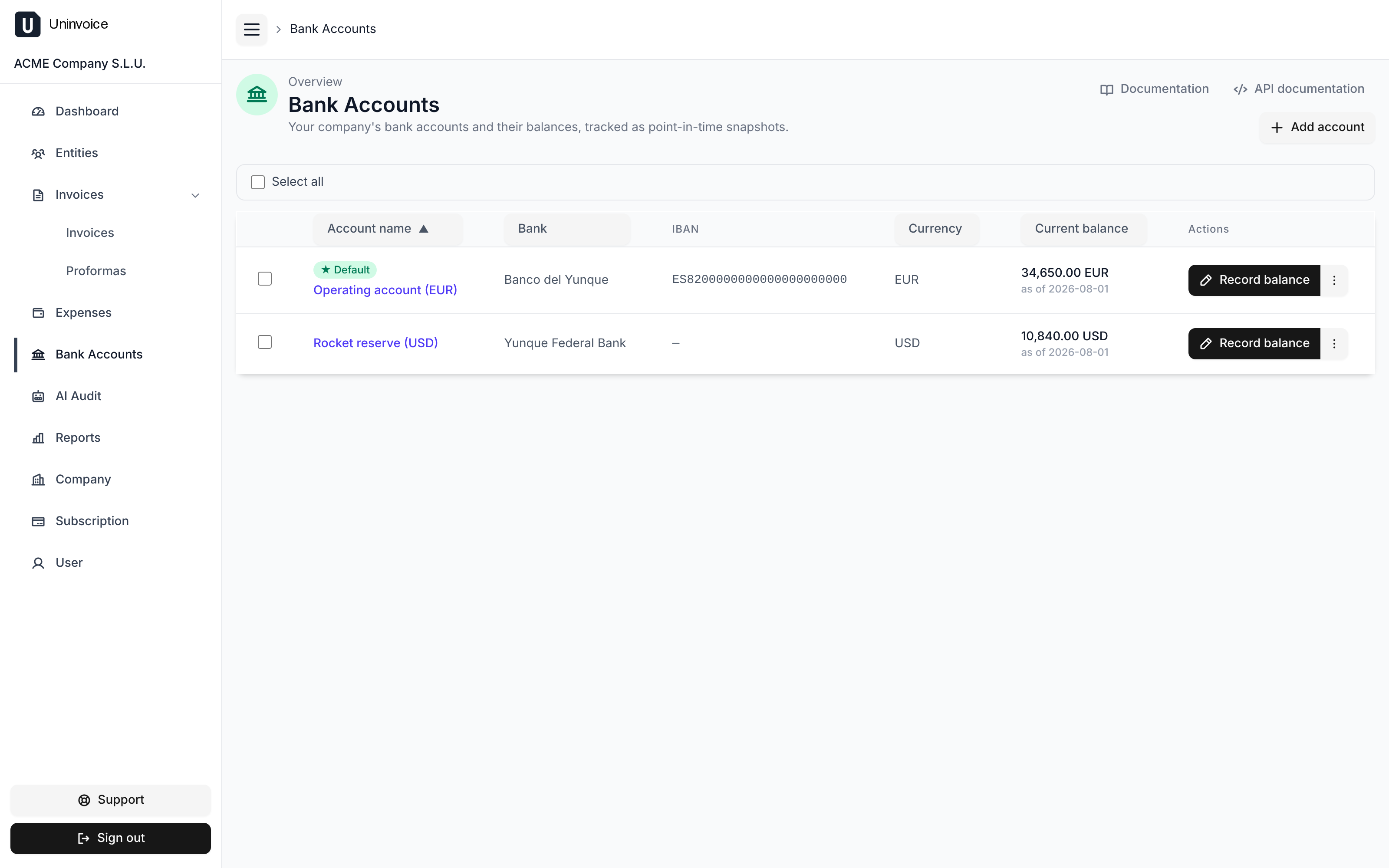
Each account keeps the history of those snapshots, with the most recent one shown as the current balance. That is enough to answer "what did I have at the end of the quarter?" without handing over access to your bank, and it costs you one entry whenever you care to take one.
You can delete an individual snapshot if you recorded it wrong, and delete accounts you no longer use.